Circular Economy Applied to Interior Design
Cristina Sendra and Aya Ulan (Eco Intelligent Growth) explain at Matter Barcelona how to apply circular economy to interiors, from materials to disassembly.
EventsMasterclass7 min read
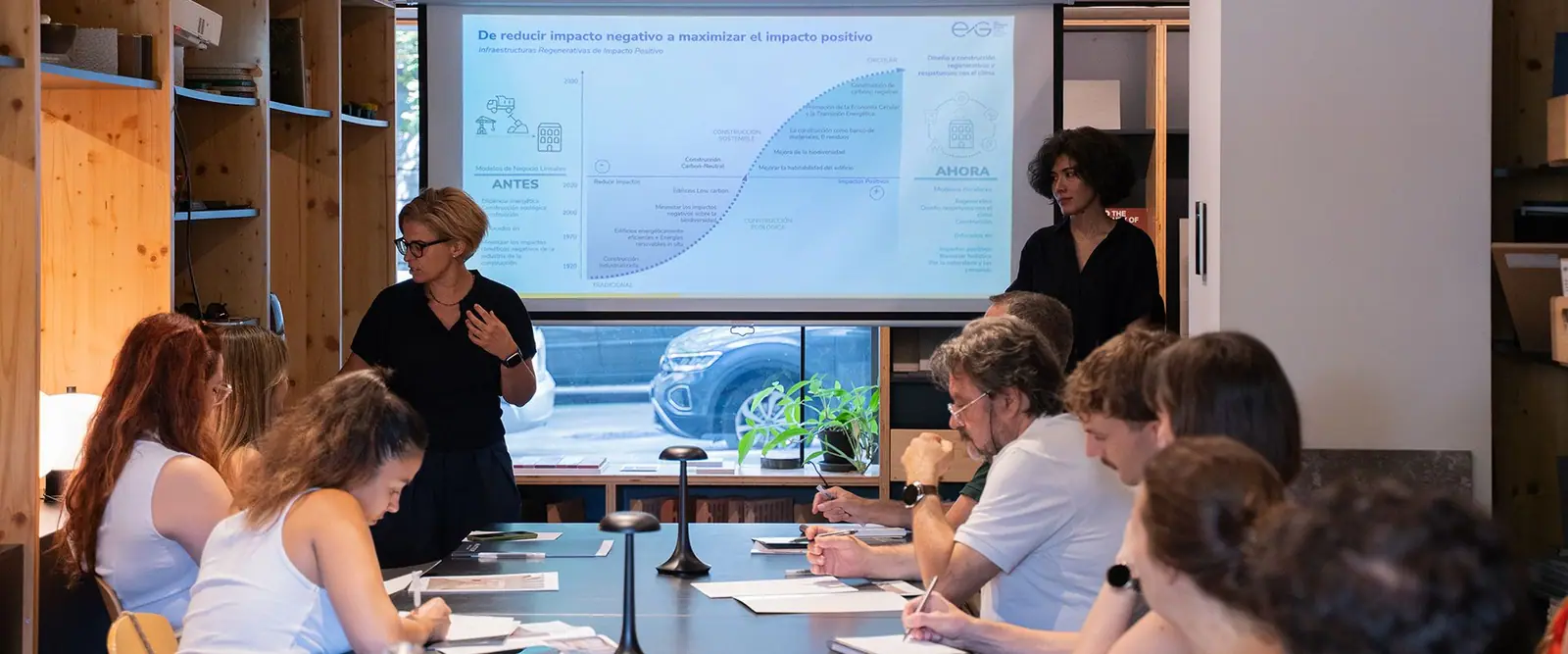
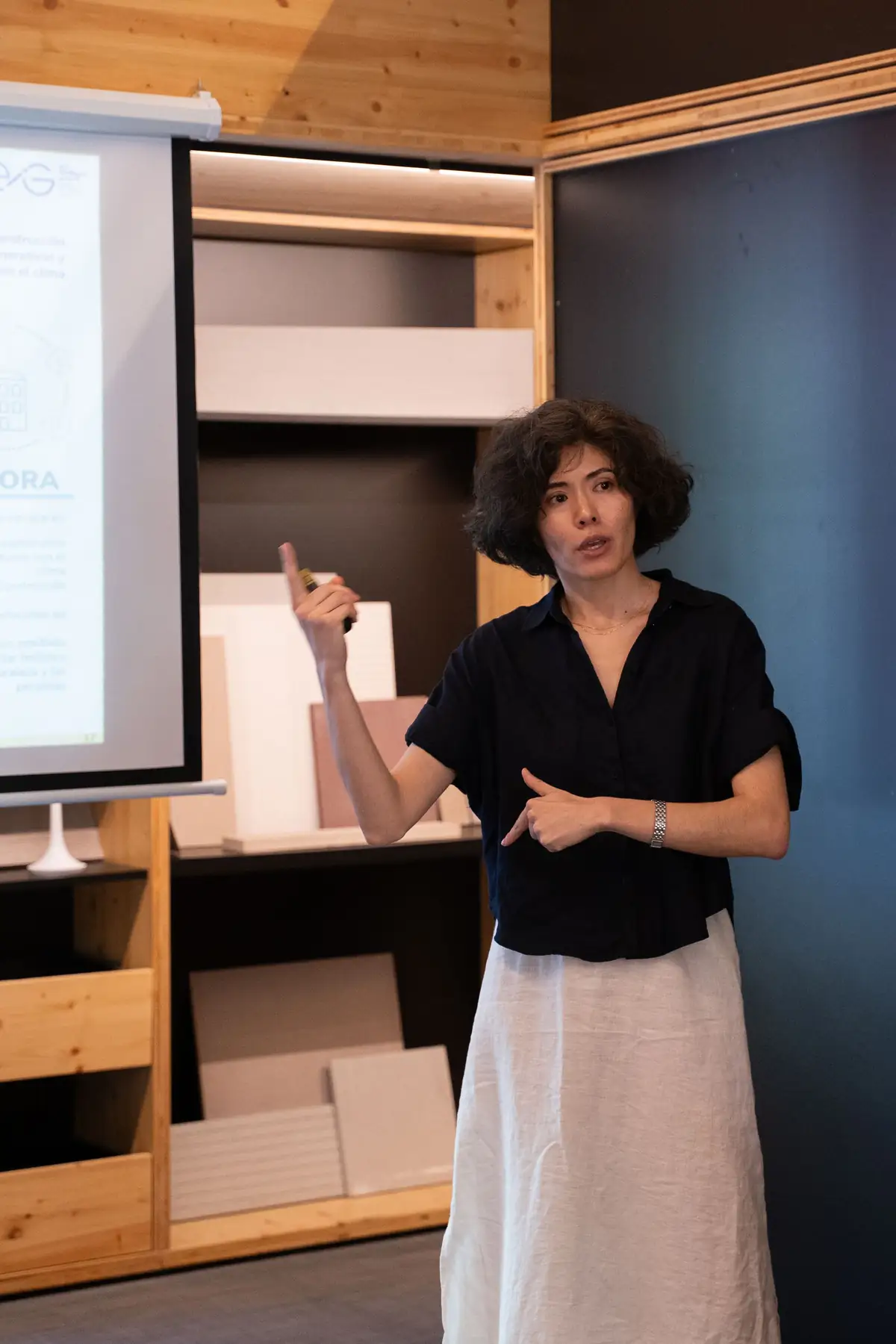
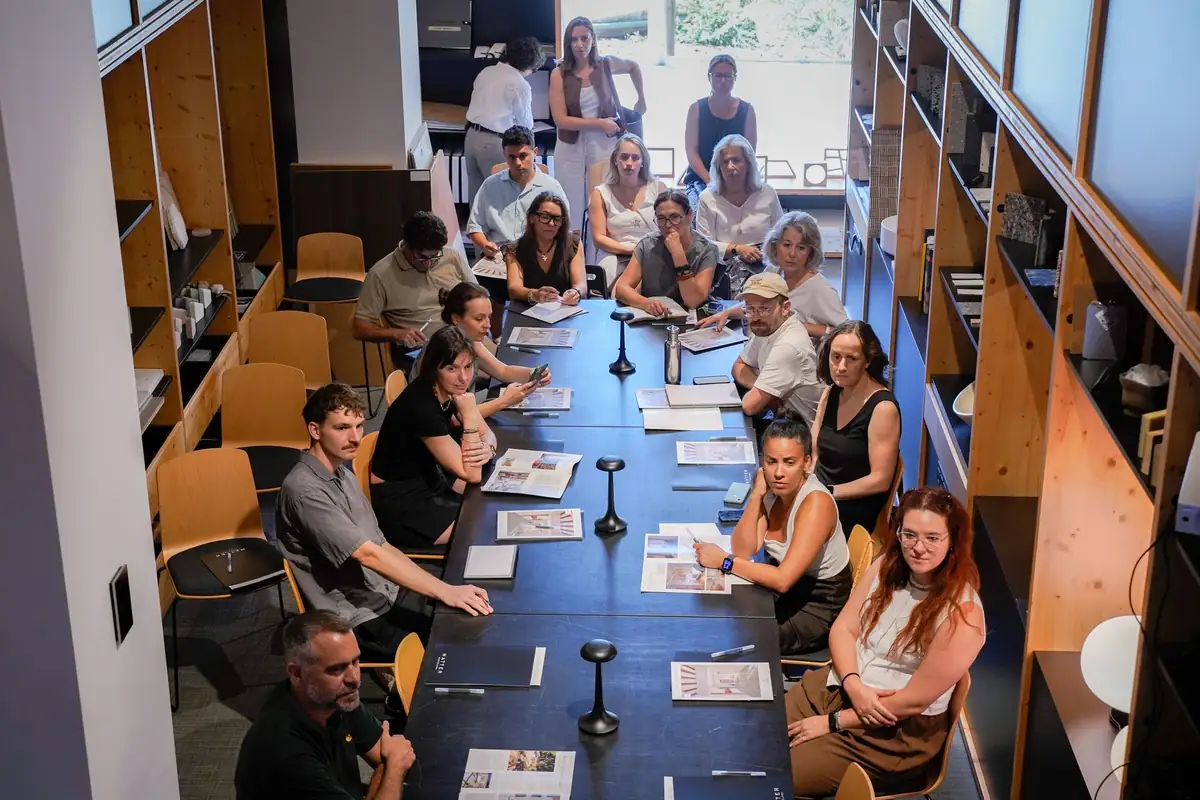
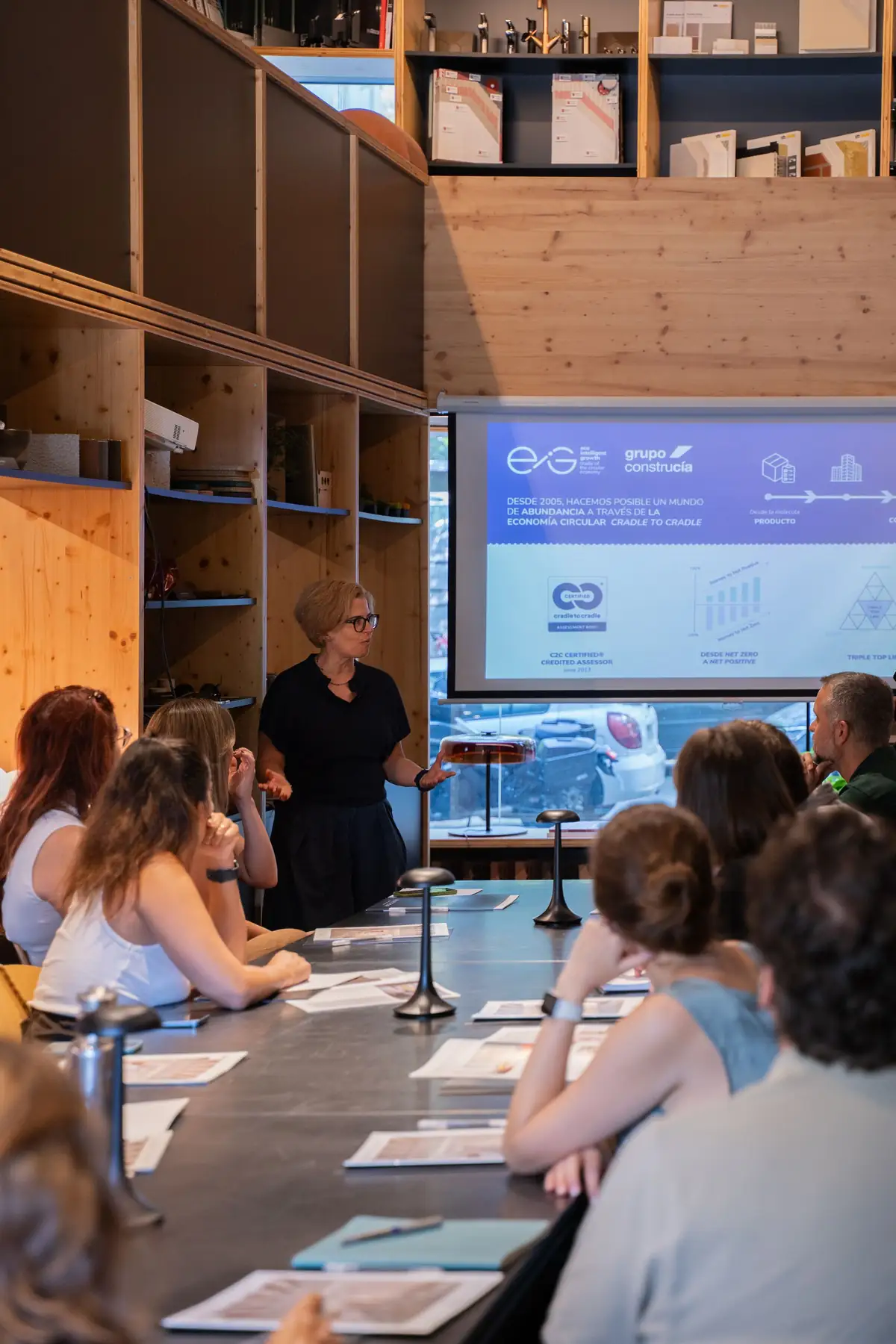
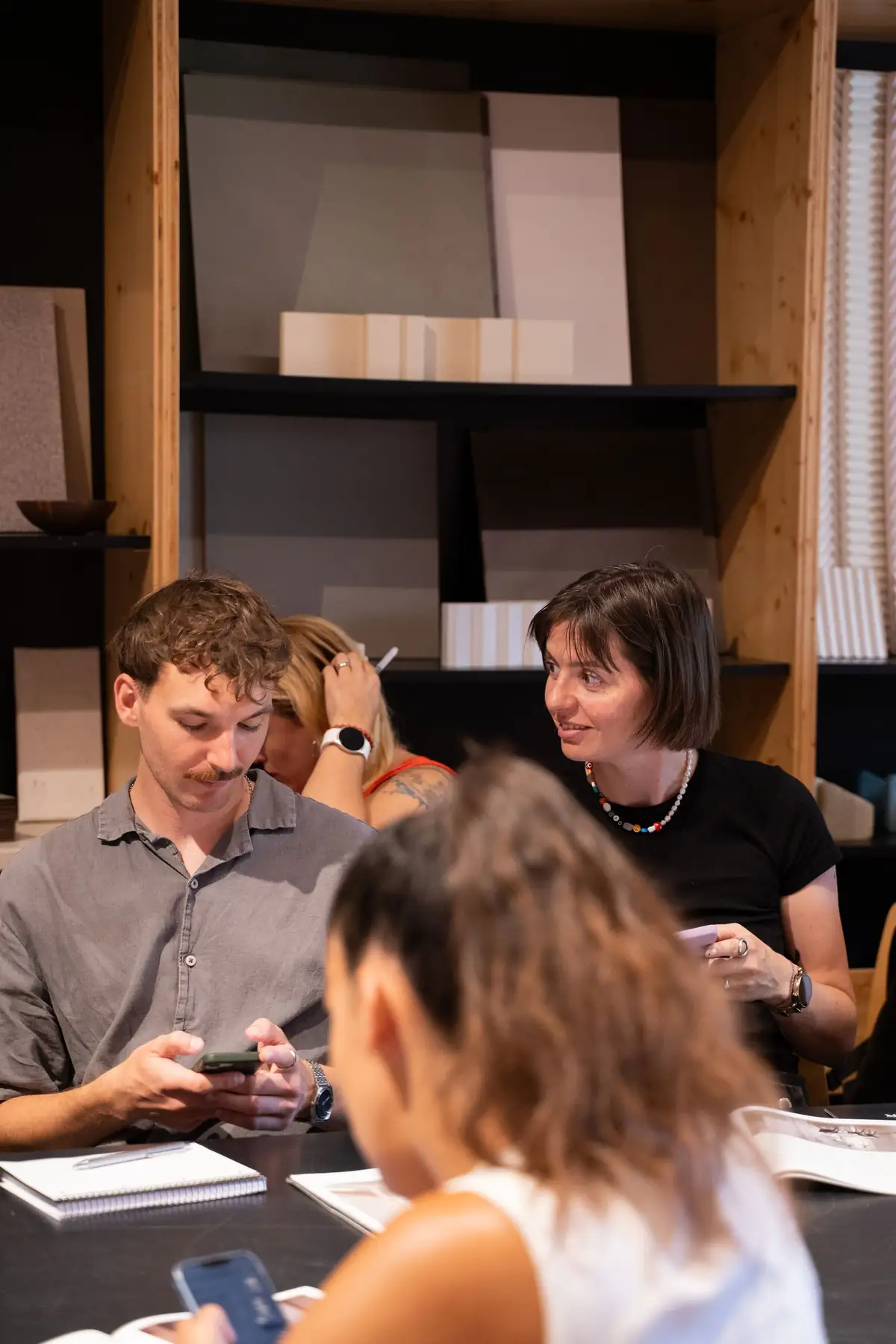
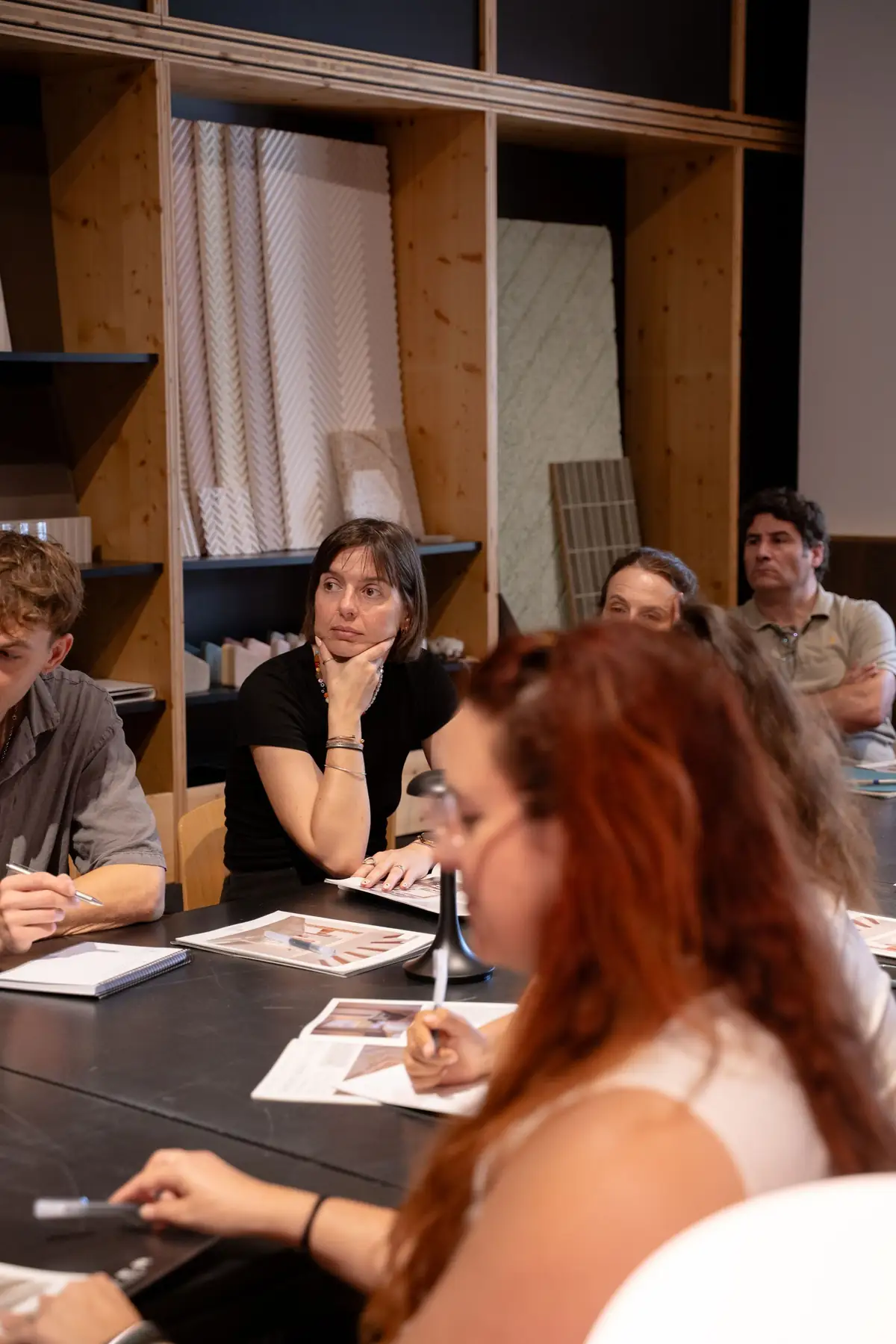
At Matter Barcelona we hosted the masterclass “Applied circular economy. Designing spaces with a positive impact”, organised by the Col·legi Oficial de Dissenyadors d'Interiors i Decoradors de Catalunya (CODIC) through its Demarcació de Barcelona. It was led by Cristina Sendra and Aya Ulan of Eco Intelligent Growth (EIG), the Grupo Construcía consultancy specialising in the circular economy and Cradle to Cradle. Kristina Georgieva, an interior designer and industrial design and product development engineer specialising in sustainability and the circular economy, and a member of the Board of the Demarcació de Barcelona, was also involved in organising the event.
The session started from a premise: interior design makes decisions —about materials, joints and finishes— that determine whether a space generates waste or avoids it, whether it pollutes or regenerates. That power, often invisible, was the common thread of the afternoon, and the message it left was clear: the circular economy is not a phase that comes after the project, but a design criterion built in from the start.
Cristina Sendra, a chemist and environmental scientist and EIG's technical and knowledge director, and Aya Ulan, an industrial design engineer specialising in circular products and C2C certification, structured the talk into five sections: circularity without myths, the hidden power of interior design, the knowledge that will shape the next generation of designers, circularity in practice and, to close, design beyond sustainability. In this summary we gather their main ideas, the tools they proposed and the reference projects they cited.
Circularity without myths
To dismantle the idea that “circular” is synonymous with “recycled”, the speakers turned to an everyday image: a box of LEGO. Its pieces are designed, manufactured to a precise recipe, assembled over hours and, when the model becomes boring, taken apart intact to start again. No piece becomes waste because from the outset it was conceived to circulate again. That is the heart of the circular economy: not managing waste better, but eliminating the very concept of waste through design.
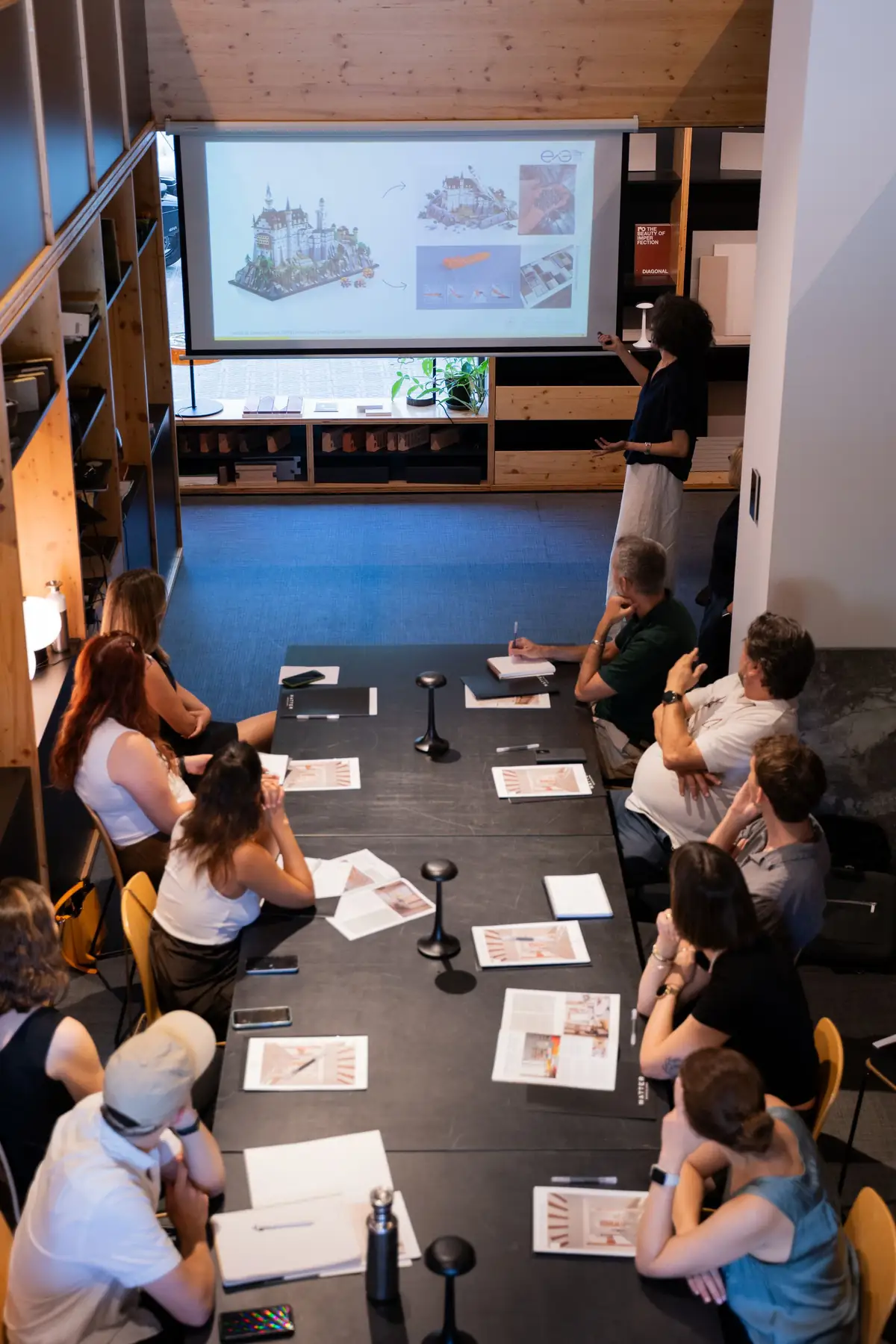
From there the talk moved on to the two great schools that founded circular thinking: Walter Stahel's performance economy —which decouples the creation of value and jobs from resource consumption— and William McDonough and Michael Braungart's Cradle to Cradle, which distinguishes between the biological cycle (materials that return safely to nature) and the technical cycle (materials that circulate indefinitely in industry). On that basis rest the three principles with which the Ellen MacArthur Foundation defines the circular economy today: eliminate waste and pollution through design, keep products and materials in use, circulating at their highest value, and regenerate natural systems.
The hidden power of interior design
The second section shifted the focus from theory to practice. For decades, construction operated on the logic of reducing negative impacts: less energy, less carbon, less waste. EIG's proposal is to make the leap to maximising positive impact: spaces that not only do less harm, but add value to their surroundings and to people.
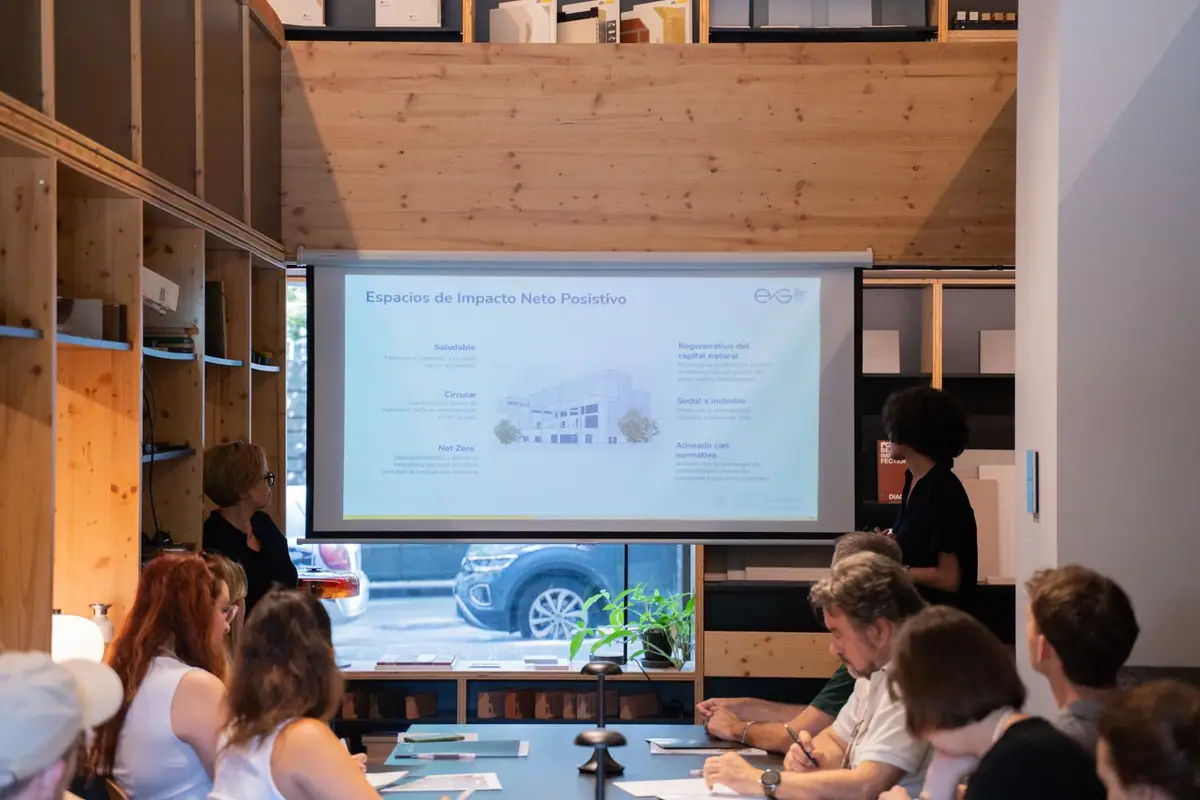
That leap takes shape in the idea of the Net Positive Impact Space, which combines six attributes: healthy (it supports the wellbeing of its occupants), circular (it works as a materials bank so that materials can be revalued at the end of their life), net zero in energy, regenerative of natural capital, social and inclusive, and aligned with regulation and sustainable investment. In practice, a circular space meets five conditions:
- Waste-free: it is designed so that its components are recovered rather than ending up in landfill.
- Toxin-free: its materials have a known chemical composition that is safe for people and the environment.
- Made with circular products: the products specified are designed to return to a biological or technical cycle.
- Traceable: what is installed and where is documented, so that it can be maintained and recovered.
- Ready for new business models: it allows repair, remanufacturing or service models instead of buying and discarding.
The circular design toolbox
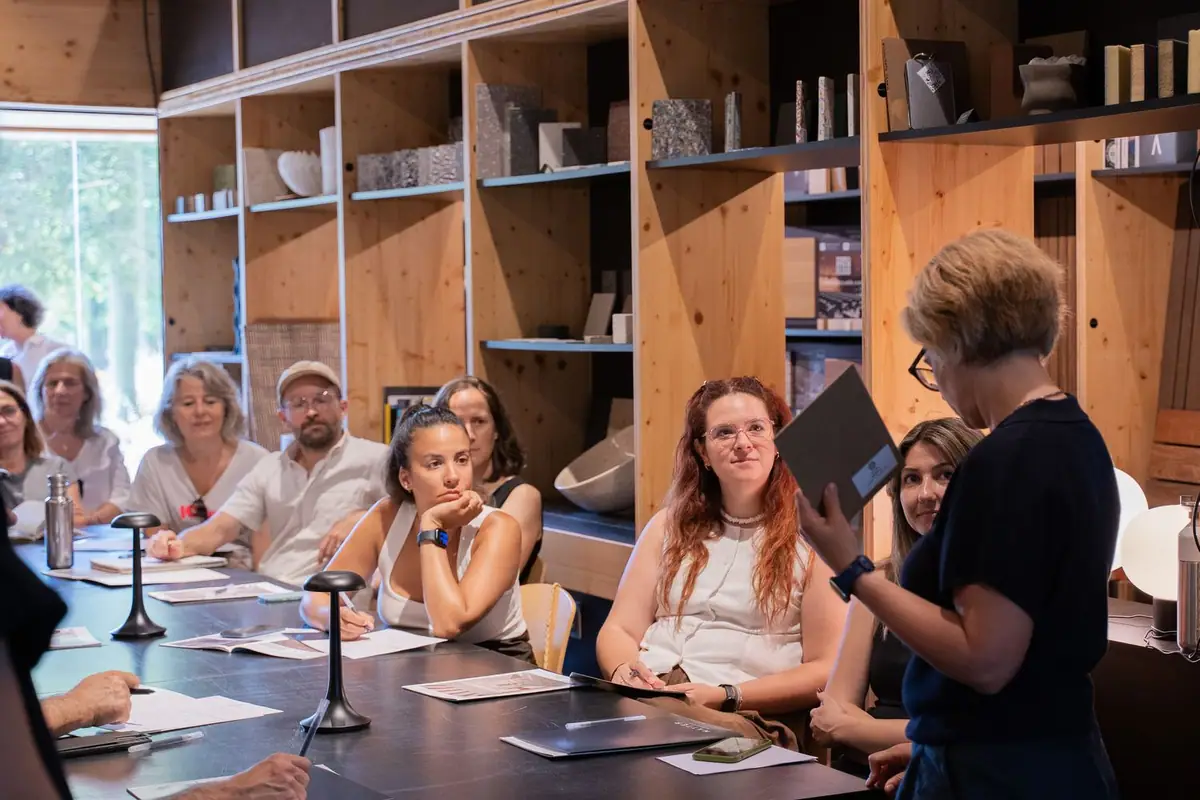
The central part of the masterclass was the most practical. The speakers presented the four tools that make it possible to take circularity from discourse to the building site.
1. Material intelligence
The first gesture of circular design is material: minimising the amount of material used, prioritising health (toxin-free chemical composition), reducing the carbon and water footprint and prioritising circular materials. Here certifications act as a guide against greenwashing —C2C Certified, EPD, Declare, EU Ecolabel, among others— and help to standardise eco-metrics and simplify specification. It is worth knowing what each one certifies, because they are not equivalent:
2. Design for disassembly
A space is only circular if it can be taken apart without being destroyed. The speakers drew on the shearing layers of a building —the idea, popularised by Stewart Brand in How Buildings Learn, that a building is made of layers that change at different rates, from furniture renewed every few years to the structure that lasts decades— to explain why adaptability, versatility and reversible connections are design decisions, not construction ones. For specifiers, the practical question is how each element is fixed: a joint that can be undone allows the piece to be recovered; one that can only be undone by breaking it turns it into waste.
3. Traceability
The materials passport —the digital inventory of everything that makes up a space— was presented as the key tool of circular construction: it turns the building into a documented materials bank, with its own deconstruction manual, and makes it possible to maintain and recover the value of each installed product. EIG has applied it, for example, in Grupo Construcía's offices in Madrid: according to the consultancy, 97% of the materials were correctly identified and 99% have a defined circular pathway for the end of their first use cycle.
4. New business models
The last link is economic. In the transition from waste to resource, new roles emerge such as the repairer, the remanufacturer or industrial symbiosis: new models that allow material to be relocated within the same project or in others. Building in a circular way requires business models that support these new dynamics of reuse.
Designing beyond sustainability
The closing section broadened the perspective. Being circular is no longer just an ethical matter: it is a competitive strategy. Regulatory pressure —the Corporate Sustainability Reporting Directive (CSRD), the due diligence directive (CSDDD), the Energy Performance of Buildings Directive (EPBD), the EU Taxonomy and the Green Deal— and financial pressure —access to financing, green bonds, the value of real estate assets— are transforming the sector, and projects that get ahead gain in profitability and risk management. For business, circularity translates into lower waste management costs, cheaper maintenance, the shift from CAPEX to OPEX models and alignment with corporate reporting objectives.
The speakers illustrated this with projects that show it is not a distant ideal: the Venlo municipal offices, designed by Kraaijvanger to Cradle to Cradle criteria; ZIN in Brussels, where a very high proportion of the material from the former towers was reused or recycled in the new complex; TRÆ in Aarhus; the 27 apartments by NUA arquitectures in Salou; the Sancal refurbishment in Madrid based on the reuse of materials; and the work with H&M in Barcelona.
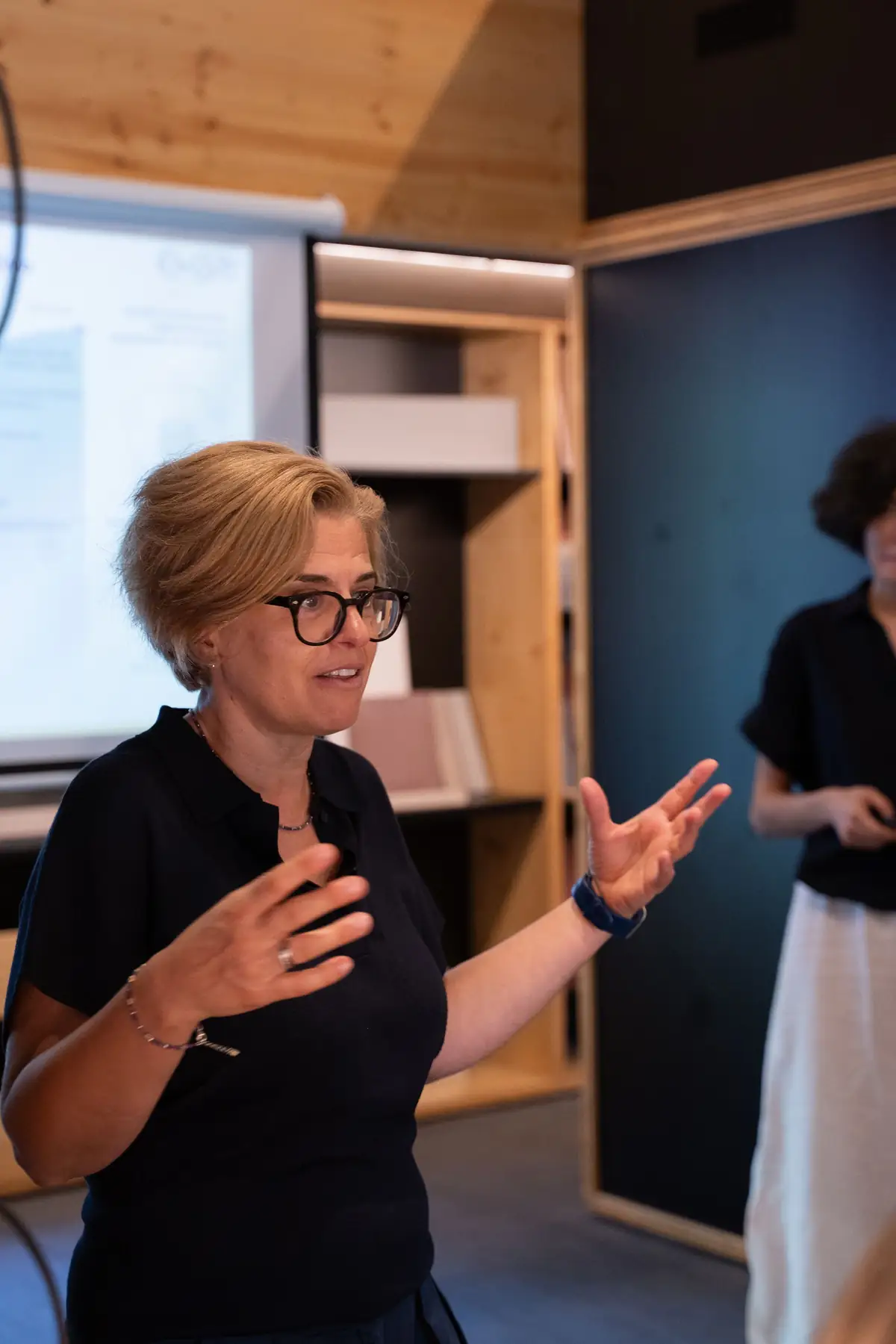
From linear to systemic thinking
The conclusion was a change of perspective rather than a list of techniques: moving from linear thinking —isolated pieces, cause and effect— to systemic thinking, where design is understood as a network of relationships between stakeholders. Because a circular space is not made by a product, nor by a certificate: it is made by an ecosystem of suppliers, contractors, deconstructors, processors, architects, designers and clients working with the same logic. Five keys for projects emerge from the session:
- Decide early: circularity is defined at the outline design stage, when materials, joints and finishes are chosen.
- Specify with data: certifications and declarations such as C2C Certified, EPD, Declare or EU Ecolabel make it possible to compare products and avoid greenwashing.
- Design for disassembly: independent layers and reversible connections allow the space to be adapted without demolition.
- Document what is installed: the materials passport preserves the value of each product at the end of its use.
- Work as a network: suppliers, contractors, deconstructors, designers and clients share the same logic.
Speakers and organisers
- Cristina Sendra: chemist and environmental scientist, technical and knowledge director at Eco Intelligent Growth.
- Aya Ulan: industrial design engineer specialising in circular products and C2C certification, circular product director at Eco Intelligent Growth.
- Kristina Georgieva: interior designer and industrial design and product development engineer, member of the Board of CODIC's Demarcació de Barcelona.
- Eco Intelligent Growth (EIG): a Grupo Construcía consultancy based in Sant Cugat del Vallès, active since 2005 and an accredited Cradle to Cradle Certified assessment body since 2013, according to the company.
- CODIC: the Col·legi Oficial de Dissenyadors d'Interiors i Decoradors de Catalunya, which organised the session through its Demarcació de Barcelona.

Many of the decisions discussed in the masterclass begin with the choice of materials. At the Matter Materioteca, in Barcelona and Madrid, you can explore materials and review their technical and environmental information with our team before specifying them.
Book your visit to Matter to talk about the materials for your next project.
Book a visit